HE HELD THE ALL-TIME RECORD FOR STOLEN BASES for the Baltimore Orioles. Which means he was one of the best in the world at this, and that’s not just anything.
At the level he was stealing bases – a 97% success rate – it is art, wit, talent, and a huge gift. You have to accelerate at exactly the right split second – having successfully decoded the algorithmic possibilities of the pitch – while you precisely register the present and future position of the moving infielders. You have to decide where and at what height to slide and where the throw is coming. You must have the mental willingness and courage to provoke your very talented and angry opponents. Oh, and you have to be damned fast. And a ton of other things I have no idea about. But this interview is not about baseball (or maybe it is).
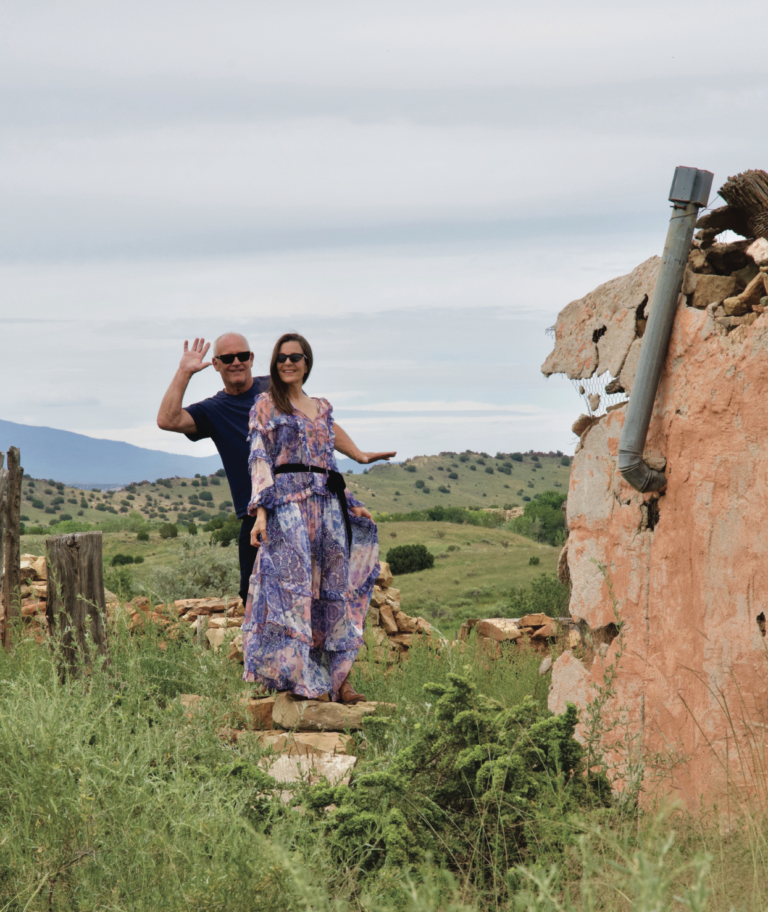
After baseball, Scott came to Santa Fe, where he manifested a dream. He believed his future wife would show up at El Farol, that he would recognize her, and vice versa. He waited five years.
Then Elizabeth showed up. Both were artists before, but they now work together across a number of mediums. They work from dawn to dusk and hang their work on the plaster walls of their airy house. Their life, it seems, is a kind of artwork.
Some of us would prefer to believe that world-class athletes couldn’t possibly have room for another extraordinary capacity. That’s fair, but it’s not true.
How did you two meet?
Scott: I was painting late at night on the back deck, and this vision was right there, crystal clear – it said, You sit in this chair, you wait, you’ll meet your soulmate. And it told me where to go.
I don’t drink; 100% sober since 1986. But the chair was at El Farol. So I sat there for over five years. It didn’t matter when it came.

So I was painting late, like 9 o’clock at night, and a voice said, Go on up to the chair, and I was going, Oh gosh, I don’t know. But I went up to the chair and somebody was sitting in it. The woman stood up and said, Do you wanna sit in the chair? I said, Sure.
Within two hours, we were reciting Pablo Neruda poetry, and the next day, Elizabeth was working with me. That was 2o years ago. We met and, basically, we were hooked to the hip.
And you had no doubt she would show up sooner or later?
Scott: I knew that soulmate was gonna show up.
Elizabeth, is this accurate?
Elizabeth: So, a friend of mine and I decided to come to Santa Fe. We toured around a little bit and ran into a gallery owner who recommended we go to El Farol if we wanted to go where locals go. So we went. We were sitting at the bar enjoying the evening, the music, and I looked to my right. The energy I felt when I saw Scott was like nothing I had ever felt before. And I turned to my friend and said, There’s something very interesting about that man. Little did I know what was ahead of me and how wonderful and immediate it would all be.
Part of that was Scott’s baseball career. Sounds like you were a pretty good base stealer.
Scott: Cal Ripken, the greatest shortstop in the history of baseball, said I was one of the fastest guys he ever played with. I have the highest stolen base percentage in the history of the Baltimore Orioles organization. In baseball, percentages are a big deal: batting averages, fielding averages, stolen base averages.
It’s very much a mind game. The minute I walked onto a baseball field, I started assessing the competition. I would be watching players’ arms, watching their range – especially when pitchers started to warm up because they would always have a selection of pitches. I would start assessing my strategy on how I would get the largest lead from first base and the best break I could get.
And then you read the second baseman or shortstop covering the bag. You watch their eyes and you watch their glove. If the ball’s gonna be in front of the bag, then you’re gonna do a hook slide out toward center field. If the ball’s gonna be high, you go straight in. So a big part of it is knowing where to slide, how hard to slide, and to what part of the bag you’re gonna go to be safe.
It wasn’t just stolen bases. I led baseball in 1979 in fielding percentage. I led the Orioles organization in the fewest number of strikeouts per at bat. And I led all of baseball in fielding percentage as an outfielder. I only made one error in 105 games.
WANT TO READ MORE? SUBSCRIBE TO SANTA FE MAGAZINE HERE!
Photo Courtesy Scott and Elizabeth