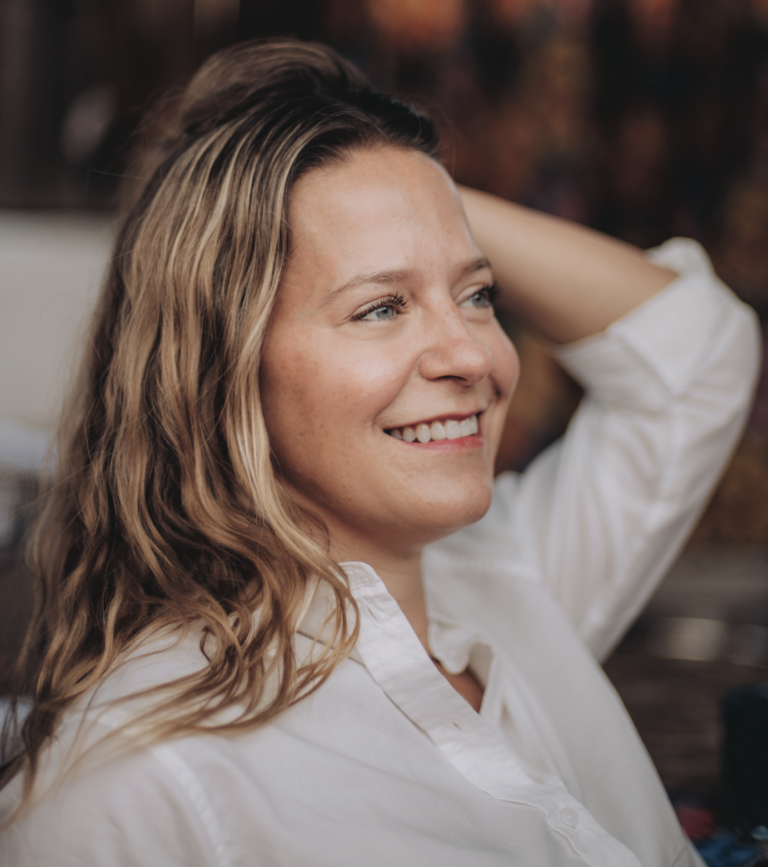
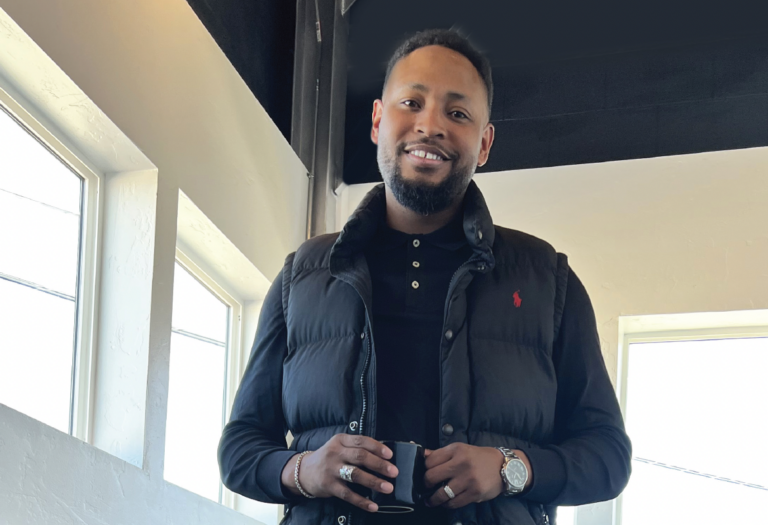
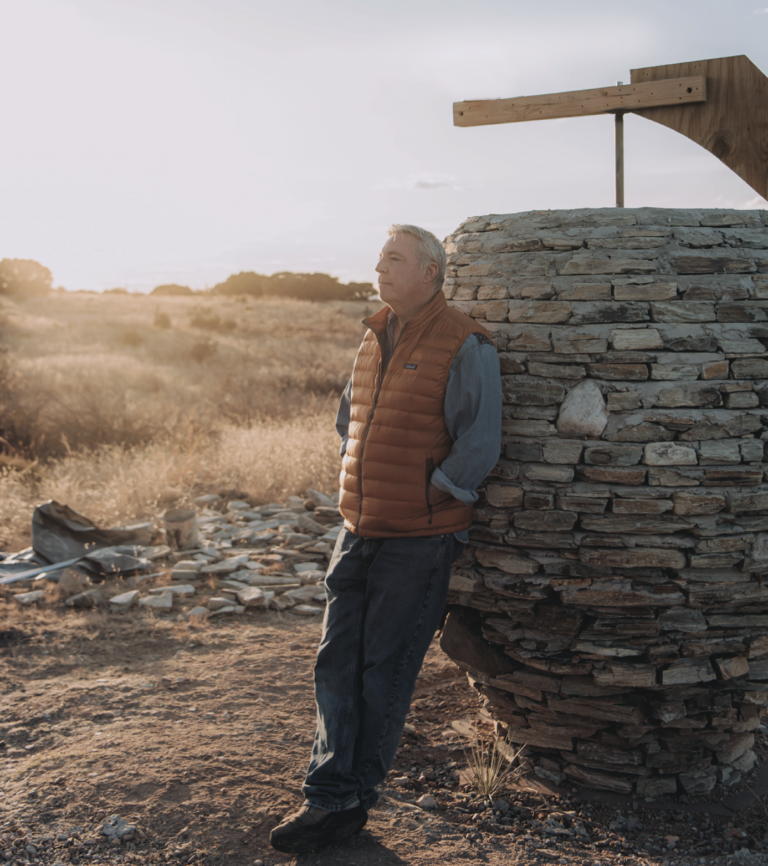
Anna Sofaer + Rob Weiner

archaeologists

Inscrutable Chaco Part 1: Sun Dagger

11 A.M., JUNE 29, 1977 CHACO CANYON.

You are Anna Sofaer, a young artist in the company of some amateur archaeologists. You are climbing Fajada, a 430-foot sandstone butte, that stands like sentinel at the entrance of the Canyon. You recognize the vertical stack of sandstone slabs leaning against a cliff face. You have seen them before and knew that petrographs lay emblazoned on the cliff wall behind the slabs. You notice a shaded recess between the two petrographs. One is a large nine-ring spiral, the other a smaller, three-ring spiral with a tail.

Then you see it: A bright vertical dagger-shaped shaft of sunlight moving down the large petrograph. It moves as though alive! You watch the dagger pass a short distance, to the right of the spiral’s center. In 12 minutes, the dagger traverses completely down the spiral and disappears.

The astronomical system you stumbled across that June morning was at least equal in precision to any other device yet found in the New World or Old.

45 YEARS LATER

You have never lost your sense of awe. You’ve let it guide you, and it has carried you, over the years, to the founding of the Solstice Project. In creating that, you chronicled the growth of a new perspective on the fundamental mystery of the Chaco.

You have become something of a star in archaeological circles, a kind of Jane Goodall of the Chaco. With surveyor Phillip Tuwaletstiwa and your partner Rob – a young Indiana Jones PhD student – you’ve made a documentary The Mystery of Chaco Canyon, narrated by Robert Redford. You are a bit uncomfortable with semi-celebrity that comes with your groundbreaking work, but you accept it because it helps you finish things that need to be done. Now you’re working on your next film, which will show how vast the Chaco region is, reaching into four states.

You are still the young woman in search of the secrets of Chaco. It remains beautiful, strange, and terrifying. At once unfamiliar and yet personal, sometimes welcoming, sometimes overwhelming. Let’s hear the story.


Your big discovery was the sun dagger.

Anna: The Eureka! moment! Actually, that, Oh my God, you found the Maltese Falcon came later when people really understood what we’d discovered. I had just gone to Chaco with an interest in the rock art. And it just happened that I got up to the top of Fajada and found that beautiful spiral with the Dagger of Light — all at exactly the right time.

I had this fascination with ancient sites around the world that were aligned with the sun and the moon. And I’d been to these sites with scientific publications trying to figure out how they worked.

And so I knew, the dagger was marking of the sun at the highest point in the day and the year. We were near noon, and we were near solstice. That’s the most powerful moment. But it all seems odd, doesn’t it?

It does seem odd. Great timing.

Anna: I had some sense that it would be the beginning of a long journey, and that it would involve me as an outsider to a world I had just entered. Who were these Chaco people? It was filled with mystery.

So you realized that you had stuck your foot into something that was infinitely large and complex and political and theatrical, and that it was going to take you somewhere…

Anna: Yeah, and I think I had the courage to keep going because of being an artist, to be honest. But part of the rough haul was people not giving me a lot of respect because I was just an artist.

But being an artist gave me the sense of truth of the site. And it gave me courage, an internal conviction that this could not be a coincidence. Because the image was so powerful.

Rob: It’s important to remember that there’s nothing further from the life and the mindset of an ancient Chaco person than being an academic. Academic archaeologists spend their lives reading books and writing things, and those are very different activities from anything the Chacoans were doing. To me, it’s funny that those people would be critiquing Anna for being an artist because that’s what the people who made the rock art were.

Anna: It was a gift, not being in the academic establishment of Southwest archaeology. But even more importantly, I became friends with a man that became a colleague for years, Rolf Sinclair, the head of one of the divisions of physics at the National Science Foundation.

He played a very important role being our in-house skeptic, always wanting the data, making sure when we took photos of the light markings everything was with nuts-ass precision.

We also had an architect trained in Germany in shadow and light who understood that the curvature of the rocks were actually allowing the downward movement of the Dagger, which is part of its drama. So it was a collaboration from the beginning.

And what about the Pueblo people? What did they think?

Anna: The first Pueblo person I spoke to was the governor of Santo Domingo. I showed him the photo of the Dagger of Light in 1978 right within months of finding it. And he said, Thank you for showing us. We appreciate it very much. And we cannot talk about it. It’s a sacred site.

But when I heard the words sacred site, I felt he was telling me that in a way, Here, you’re going to carry this. And it wasn’t a warning, it wasn’t a Stay away white woman, it was an appreciation.

Rob, being an archaeologist, what do you make of this discovery?

Rob: In academia, every field has its distinctive ideas. Anthropology is about environmental adaptation and social inequality. Nobody talks about the aesthetics of the pottery, the aesthetics of the rock art. It’s like pottery is just something used for dating.

Archaeology has a lingering history of being a wannabe science. There’s a lot of science envy. People love to talk about archaeology as science. But really, at the end of the day, archaeology is about human beings. And I think the academic study of archaeology often gets very far away from that.

Archaeology is often just a trading back and forth of archaeological paradigms and concepts rather than really trying to get into the minds, into the lives of ancient people.

How did you two first meet?

Rob: I had been invited to my friend’s wedding. And before the wedding, I drove up into the Sangre de Cristo Mountains with a friend. We were hiking and I totally lost track of time and missed the wedding. Well, I also had a dinner invite that same night that I had said no to. But now I missed the wedding so I could go to the dinner.

So I showed up at this dinner, and this very, very interested woman started asking me, Oh, you go to Brown? What do you study? And I said, Well, I’ve been working in the Mediterranean, learning Hittite, and looking at the Late Bronze Age. But I’m really getting more interested in the archaeology of Chaco, here in New Mexico, where I grew up. And I really am into this group called the Solstice Project. Have you heard of them? Of course, the woman I was talking to was the Solstice Project.

I don’t want to say it was like finding the Sun Dagger,but it was pretty mind blowing.

The discovery was a while ago. What keeps you guys on the edge of your chair, years later?

Anna: The initial draw to go to Chaco was to be where people had this unbelievably powerful connection between the earth and the sky. And that’s still there.

They made three rock slab marks on the same spiral, the extremes of the sun and then the moon at the major and minor – Chaco is exquisite work that nobody today could do. It’s that quality of genius they had. And the alignments between buildings across miles, the roads, like the incredible Great North Road that Pueblo people call their North Road – You can’t see that road from any one spot. In fact, it has to be seen in the mind, which makes it even more powerful.

When you’re in Pueblo Bonito and you’re in a north-south alignment with that central wall, you are at the same time sensing the stretch of that wall to the north and 35 miles to where it drops into a very steep canyon and where they drop shards in a ceremonial act. That is thrilling.

We can’t do that today. It’s part of the mind we can’t access. But the fact that ancient people 1,000 years ago had that mental capacity and were driven by a sort of spiritual paradigm…I can’t think of anything more interesting.

North America is horribly understood and underestimated. What we learn in school about Native culture is about beans and squash and teepees and bows and arrows and tomahawks. What we grew up with.

But in Chaco, you have almost an empire civilization covering an area the size of Ohio, 70,000 square miles. Nobody knows that.

Rob: For me, part of what is so great about Chaco and the Indigenous North American period is the idea of conscious devolving. The intense transformation of these societies, whether it’s in the Southwest from Chaco to the Pueblos and the Diné today, or Cahokia from these huge earthen pyramids to people living much more simply in smaller villages. It’s like ancient people in North America were on the track to a hierarchy, a civilization, a monumentality path – and they stopped and they turned around.

What does that mean?

Anna: Alfonso Ortiz, who was a great mentor of mine from Ohkay Owingeh, said to consider that there’s such a thing as a choice to devolve. If you look at Pueblo culture, they’re very aware that their ancestors built on this monumental scale. In the words of Paul Pino, these were people with great spiritual power and power over other people. They had an awareness that their ancestors had become so hierarchical and dominant over other people, maybe even enslaving them to build the buildings. And so they changed – and now live in a much more reciprocal relationship with nature, where you don’t dominate or use your ability to control natural forces. Rather you act humbly with Mother Earth and with the spirits in every part of the natural world. That’s how they live today, much more communal. There’s no hierarchy, and all activity has a spiritual aspect of integration with the rhythms of nature.

Is that why they left Chaco?

Anna: I think what we’re learning from Pueblo people is that there was a dark aspect to Chaco at the end, as some people became very powerful over other people. The brilliance they achieved was almost like shamanic in controlling the natural forces of weather, animal life, animal behavior, birds, and so forth. And that can become dangerous. Chaco may have spilled over into that dark side.

Rob: There’s also the inequality. You have people living in great houses who are eating better than everybody else, who are taller, and healthier and who get buried with tens of thousands of pieces of turquoise. If we were to use modern day parlance, they were the 1%. And everybody else is living in very humble houses, not eating as well.

Anna: The place has a real power still. It’s very timeless. What happened there has left a sort of residue. There’s a residue.

Does that make you afraid?

Rob: No.

Anna: You had one experience, didn’t you, Rob?

Rob: Yeah. Let’s just say that when I’m getting off into a place of arrogance and not relating to the place properly, it makes that abundantly clear.

Chaco has a dark side and I feel like it’s a weight that I live with every day. It’s like, Why are we telling this story?

Why are you?

Rob: It’s a story with resonance and importance, about history of Native people, that needs to be respected and protected by the current dominant society. For ages, Pueblo and Navajo people lived here and they respected and protected the sites, treated them as what they should be.

But at the same time, the story itself is powerful and it’s always two sides of things that are powerful.

I had at least one Navajo friend say, Don’t go there. It’s not safe for you or your family.

I think the place has its own force field.

Anna: I think it does cause danger to people who might have an agenda that’s not the Chaco agenda.

But it’s also about more than that. What’s happening to our world is so materialistic. So, it’s been a huge gift for me to have a relationship with the Pueblo world that has different values. Values that matter.