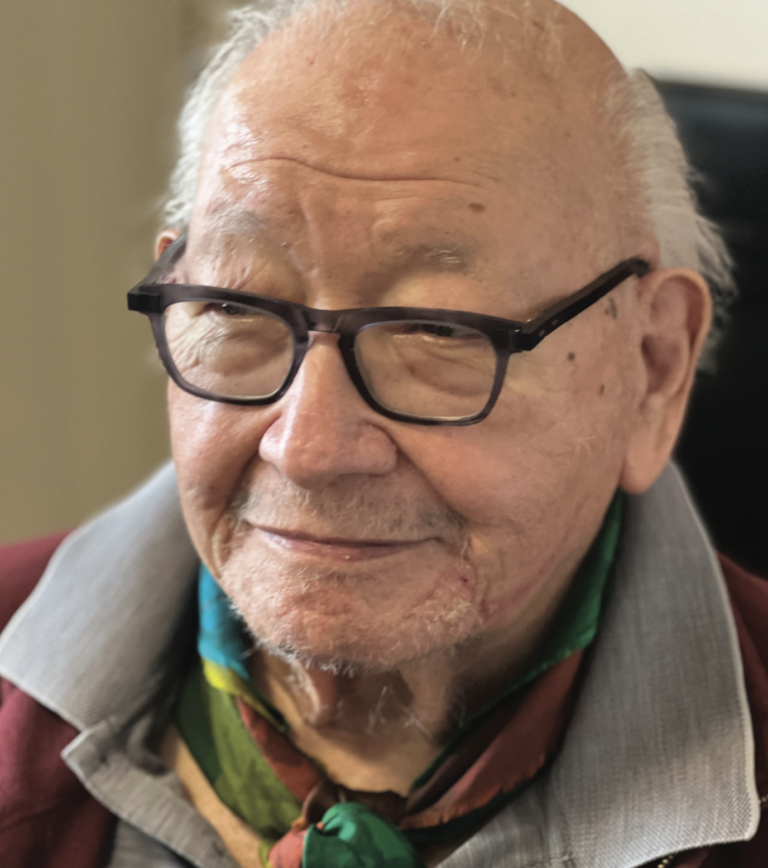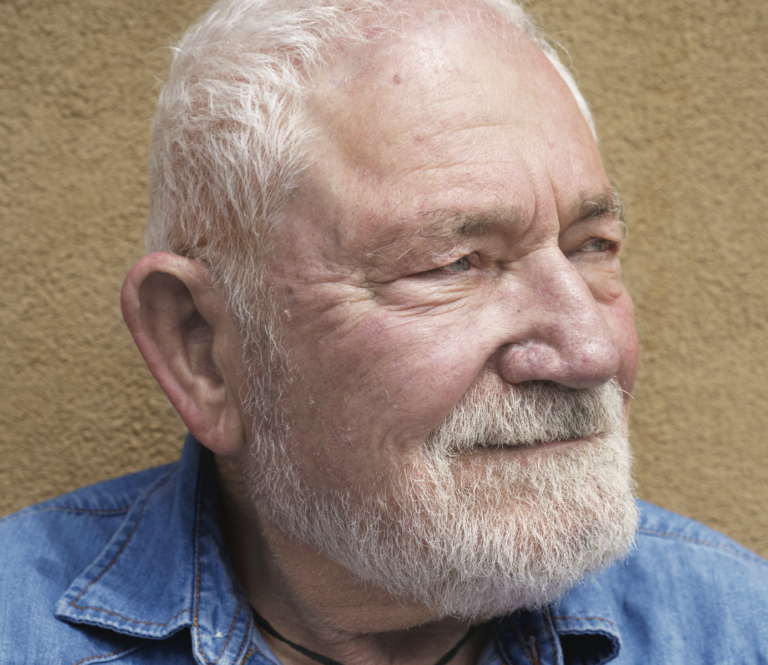
Chip Conley

entrepreneur

Back to School at 50

IF YOU WERE A HIPSTER rolling around San Francisco in the early ’80s, the town would look a lot different. The Union Square Apple Store was a Levi’s outlet. There was no Salesforce Tower. There weren’t even any techies yet. Wired was just a gleam in the eye of the editor, lounging in his dilapidated industrial South of Market office.

What you would for sure see was the Phoenix Motel, a low-budget 1950s era motel in the rough-and-tumble Tenderloin neighborhood. The Phoenix’s hip, retro style became chic as folks like David Bowie, Linda Ronstadt, and Johnny Depp started frequenting.

The Phoenix’s mastermind, 26-year-old Chip Conley, bought more small, run-down, historic buildings, and transformed them all, becoming the second-largest operator of boutique hotels in the US.

Seems like that would be plenty for a career, but Chip went on to become a New York Times bestselling author and helped turn Airbnb into the world’s largest hospitality brand.

Then he almost died. And that’s why he started Modern Elder Academy – a new school opening two campuses in Santa Fe next year. We sat down with Chip to explain why Modern Elder is so important.

What was unique about Joie de Vivre hotels?

I was working for a real estate developer in San Francisco, and noticed boutique hotels beginning to pop up. Bill Kimpton was doing them in San Francisco, and Ian Schrager in New York. I thought, This is the future and took my idea for hotel redevelopment to my boss. He thought I was crazy.

So, of course, I thought, I’m 25 years old. I can do this.

All I could afford was a broken down, by-the-hour motel in the worst neighborhood of the Tenderloin. We called it The Phoenix. Now, the interesting thing is through the developer, I’d gotten to know the concert promoter Bill Graham, the biggest in the country. And one day he says to me, Sonny, you should really make a rock ‘n’ roll hotel.

I’m thinking like, Well, I have to figure out how to create something hip, where all these bands will stay and I’ll get to hang out with them! And, amazingly, that’s exactly what happened. Red Hot Chili Peppers, Nirvana, David Bowie…all the 80s bands came to this rock ‘n’ roll hotel.

And all the Joie de Vivre hotels had themes, right?

Every one had a unique identity. We built 52 of them. I sold it in 2010.

Why?

I went through my dark night of the soul. There’s this thing called the U-curve of happiness. It happens across all cultures. People have a growing level of dissatisfaction with their life from 22 to about 45 or 50. You bottom out at 45–50. Then from your 50s on, you get happier with each decade.

I was in my 50s and hit bottom. I had a long-term relationship that was ending. I had a foster son who was potentially (wrongfully) going to prison, I was running out of cash because of the recession, and I didn’t want to be a CEO of this company anymore.

I love creativity and freedom. That’s why I started the company. But now I had 3,500 employees and no creativity or freedom.

Around the same time, I lost five different friends to suicide – all men, age 42 to 52.

I got really low. I was stuck with this identity that I built over the decades. It was affixed to me like a Band-Aid, and I wanted to get rid of it.

At one point, I was driving to the Gold Gate Bridge to jump, and I called my friend who now lives here in Santa Fe – but she was in the Bay Area then. I said, I don’t know how to deal with this, and she said, Just slow down. Right then, Aretha Franklin came on the radio singing “Amazing Grace.” I sort of woke up and thought, I gotta figure this out.

Then I had a flatline experience.

I was a mentor to Gavin Newsom, and I’m at his bachelor party. Twenty of us were out playing baseball at the stadium the Giants play at, and I broke my ankle. Well, it turned into a bacterial infection, and they put me on some strong antibiotics. A couple of weeks later, I had an allergic reaction and flatlined nine times in ninety minutes. I was 47 years old, and that was the wake-up call. Do I like my life the way it is right now? No.

I sold the hotels.

And then Airbnb called you.

Yes. I love festivals. I was a founding board member of Burning Man, and I’ve always had a thing for them. After I sold the hotels, I went on a global festival tour – 36 festivals in 16 countries. While I’m on the tour, I get a call from the Airbnb CEO saying, How would you like to democratize hospitality? This was pretty early on for Airbnb, and I was like, Who are you? And what is Airbnb?

I ended up working with them for over seven years, becoming what they called a Modern Elder. To them, a modern elder was someone who was as curious as they are wise. I thought the name was weird, but I liked the meaning.

I was basically the CEO whisperer and in-house mentor for the three founders. No one in the company really knew anything about hospitality or travel – the industry they were disrupting. We turned it from a budget site into a mainstream competitor to Hotels.com.

Interestingly, lots of times it was a challenge because Airbnb is really a mirror for society, including racism or affordable housing issues or over-tourism. We spent time partnering with the NAACP and nonprofit affordable housing advocates to solve these issues. And it worked. By the time we IPO’d, it was the most valuable hospitality company in the world.

Why did you start Modern Elder Academy?

It goes back to the flatline experience. It was like a divine intervention saying, Chip, you’ve got more options than you think.

I began to realize that life begins at 50. That my friends didn’t have to die. They needed help.

I had a lot of friends who were feeling pretty bewildered in their 50s. They need to refuel. They are looking at their lives and saying, I need a road map. I want to understand this more. I don’t want to live my life the way my parents did.

In the year 1900, longevity was 47. By 2000, it was 77. We added three decades to life in one century. Midlife has become much more important. We help people navigate that.

What exactly does Modern Elder Academy do?

I was on the board of the Esalen Institute for 10 years, and I love Esalen, but I wanted to do something different. I wanted to focus on social science, real research that would inform a curriculum. We also didn’t want to be a retreat center. We wanted to be a school.

So, with academics from Harvard, Yale, Stanford, UC Berkeley, we built a curriculum for the world’s first midlife wisdom school.

Over the first half of your life you build skills, figure out your gifts, and start distilling some wisdom. But a lot of people in their 40s and 50s don’t really even see their collected wisdom as valuable because it’s so affixed to them. When I joined Airbnb, some of the things that I thought were obvious were not obvious to the 26-year-old CEO. I began to see that the difference between knowledge and wisdom is that knowledge is something you accumulate and wisdom is something you distill.

But how does a person cultivate wisdom? How do we reframe our relationship with age?

Becca Levy from Yale has shown that when people shift their mindset on aging from negative to positive, they gain seven and a half years of life. So changing from that negative mindset – My best years are behind me, nobody wants to hire me, I’ll never find a soul mate – to a positive one adds more life than if you stop smoking at 50 or started exercising at 50.

Now, of course our body ages, but if our idea of success in life is about our body and our looks, we’re gonna be very dissatisfied or look really strange from all the things we do to try to keep youth. On the other hand, it’s clear that as we age, our emotional intelligence grows. Our wisdom can grow, and a sense of connection to something deeper and more meaningful grows.

Arthur Brooks from Harvard is on our faculty and has pointed out that when we’re young, we have what’s called fluid intelligence, a very focused intelligence. As we get older, we have crystallized intelligence, where we can think more holistically and systemically.

Our program is about harnessing this and helping people reframe their relationship with age. Not when they’re 80, but in the core of midlife.

Middle age is not a bad thing! But you’d never know it from our society. Anti-aging products are a $572 billion industry. We don’t have anti-gay products, we don’t have anti-black products, but we do have anti-aging products. It’s the last socially acceptable bias in the United States.

How old are the people who come to Modern Elder?

We have 28-year-olds and 80-year-olds. But the average age is 54.

Think of this: say the average age you live to is 90. If you’re 54, you have 36 years of adulthood behind you (starting at 18) and you have 36 in front of you. You’re only halfway through. Most of us don’t think we’re only halfway through.

In midlife there’s a lot to deal with. It’s a big life transition: empty nest, career changes, health diagnoses, parents passing away, divorce, etc. But no one is giving us the training to grow our transitional intelligence.

What are the programs like?

We have five- or seven-night programs.

More than anything, we help people learn how to become beginners again. A lot of people past 50 think, Oh, I’m not gonna learn how to cook or surf or learn Spanish. We help with that.

I’m currently teaching a course with Dan Buettner on Blue Zones, the areas around the world that have a higher-than-average number of centenarians, 100-year-olds. We discuss the nine qualities that define these Blue Zones.

Then we have the psychoanalyst Esther Perel doing a workshop on Stability versus Adventure: The Dilemma of Eros in the Lifecycle.

Michael Frante, the musician, recently did a workshop on finding your rhythm in midlife. Blake McCloskey who started Tom’s shoes, will do a workshop on entrepreneurship at any age. The workshops are on a variety of topics – purpose, spirituality, career.

It’s all about regeneration as an alternative to retirement. Fewer people want to retire at 65. Forty years ago, people did because they were doing back breaking work all of their lives. Now we have more knowledge workers.

Regeneration is about regenerating your purpose in life, but it’s also about regenerating the planet.

The land in Santa Fe can be pretty barren, right? But it doesn’t have to be. Here, at our Saddleback Ranch campus, we regenerate the soil with retired horses and rotational grazing. Of our 2,500 acres, we’ve regenerated 23%, and you see a dramatic difference. This is in the top 10 ways to make a difference for climate change.

I should also add that Modern Elder Academy isn’t some rich person’s retreat. Over half the people who’ve come have come on financial aid. We have nurses, elementary school teachers, and union plumbers. A quarter are people of color. It’s all funded through our nonprofit. That’s critical because some of the best education is outside of the classroom – people talking to one another. Wisdom is not taught, it’s shared.

Your first academy is in Baja, and you have two locations opening here in Santa Fe.

Yes, we are opening two campuses. The Saddleback Ranch, near Galisteo, is where we’ll do a lot around nature, adventure, and spirituality. Then in town, we have the former Carmelite Monastery, where we’ll focus on more creative arts, intergenerational, career-focused programs.

We start offering classes in both places early next year.

Why did you pick Santa Fe?

Our four principals sat down and came up with five locations for the new U.S.-based Modern Elder Academy. The only place on all five lists was Santa Fe.

Why?

Because of the long history of people coming here to seek another way and to break out of a default lifestyle. Because it is a place that has a long history of Indigenous and elder wisdom that we’re tapping into. Because we see nature as a teacher, and there’s a strong sense of that here. And because we create regenerative residential communities, and Santa Fe has a good history of being a place where people retire.

Santa Fe is a different place. It’s not a normal place. And we like that.